Class 8 Science: Friction
Friction is not simply “bad”: it lets shoes grip the floor, brakes slow a bicycle and a pencil leave a mark. The useful question is whether friction is helping or wasting energy in the situation.
What to understand
- Describe the central idea in your own words.
- Use a model, observation or relationship to explain a changed example.
- Notice and correct the likely misconception in the worked reasoning.
Forces at a contact
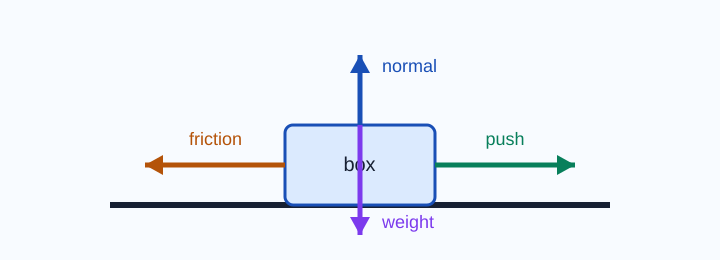
Friction acts at a contact between surfaces and opposes their relative motion or attempted motion. Roughness, pressing surfaces together and the material pair can affect its size. Lubricants can reduce direct rubbing, while treads and rough soles can increase grip.
When a box starts moving, static friction has been overcome. Once sliding begins, kinetic friction often behaves differently. Do not confuse the direction of motion with the direction of friction: friction points opposite the relative sliding.
Try, explain and check
Draw the push, friction and normal contact force on a box.
Show a reasoning prompt
Why are bicycle brake pads made to create friction?
Show a reasoning prompt
Friction does not always stop motion; it can make motion possible by preventing slipping.
Show a reasoning prompt
Next step
Write a three-sentence revision summary, then continue to the related resource. For extra practice, visit the resource library and choose a worksheet that matches the skill you need.